Symptoms
Panic Attacks & Anxiety – How Candida Sneaks into the Brain
The blood–brain barrier (BBB) is normally a dense protective shield that prevents pathogens or toxins from entering the brain. But Candida albicans possesses several virulence factors (e.g., phospholipases, hyphal formation) that allow it to traverse this barrier without structurally damaging it (3).
Here is what happens:
- Entry
The yeasts latch onto the fine cerebral vessels and slip into the tissue as if through a "ghost door".
- Inflammatory alarm
There they encounter microglia—the brain’s immune police. These immediately sound the alarm, releasing inflammatory cytokines (IL-6, TNF-α) and creating a neuroinflammatory "fire" that can feel like internal fever, head pressure, or inner restlessness.
- Toxic cocktail
At the same time, acetaldehyde and ammonia accumulate, toxins that impair neuronal energy production, consume serotonin and dopamine precursors, and weaken mood and stress resilience.
The result: heart palpitations, shallow breathing, a constant internal alarm state, classic panic attacks whose origin is not psychological but biochemical.
Brain Fog & Cognitive Crash – Why the Mind Feels “Wrapped in Cotton”
Candida produces alcohol-like metabolic toxins in the gut, such as acetaldehyde. These pass through the intestinal lining into the bloodstream and block two key systems in the brain:
- Serotonin Brake
Acetaldehyde consumes vitamin B6 and tryptophan, the building blocks of serotonin. When serotonin is low, memory, sleep, and mood all decline (4).
- eCB Signal Disruption
These toxins impair the endocannabinoid system (eCB), which is responsible for short-term memory and mental clarity. Affected individuals feel dazed, “like being drunk, but without the fun.”
In short: Candida toxins prevent the brain’s batteries from recharging properly—leaving behind foggy thinking, word-finding problems, and mental exhaustion.
Irritable Bowel – When the Gut Is Permanently on High Alert
Candida settles preferentially in the final centimeters of the small intestine and throughout the colon. There it forms biofilms, produces gases (CO₂, H₂), and generates alcohol metabolites. The consequences:
- Gas Pressure
These gases stretch the intestinal loops—causing gurgling, pressure, and bloating.
- Flood or Drought
The intestinal lining becomes irritated: sometimes everything moves too fast (loose or mushy stools), sometimes too slowly (hard or constipated). Daily stool changes are typical of Candida.
- Nerve Irritation
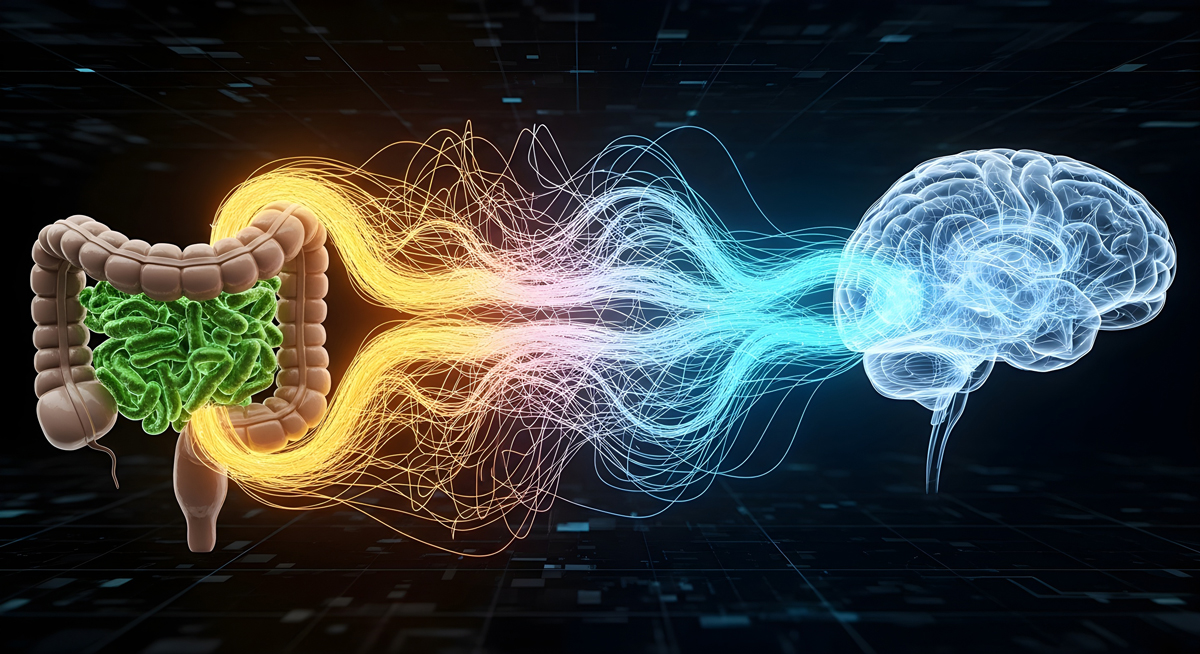
The inflamed mucosa sends constant distress signals to the brain. The result: a “nervous gut,” even though the real troublemaker is a biofilm.
- Leaky Gut
Irritation and Candida-derived toxins loosen the tight junctions between intestinal cells. Microbial fragments, toxins, and even partially undigested food particles can then enter the bloodstream, further burdening the immune system and contributing to brain fog, fatigue, and sensory sensitivities (6).
Skin Flares – When the Fungus Pushes Outward
Through a leaky gut, Candida toxins enter the bloodstream and reach the skin, provoking three characteristic reactions:
- Eczematous Patches
Redness, scaling, and itching—often in elbow folds, behind the knees, or on the neck.
- Urticaria Flares
Rapid hives, often after sugar or alcohol, when Candida releases a surge of toxins.
- Psoriasis Flares
Inflammatory cytokines (e.g., IL-17) stimulate excessive skin turnover, worsening existing plaques.
Candida can colonize almost any surface: mouth, throat, skin, scalp, vagina, nails, bronchi, lungs, gut—and the more imbalanced the terrain, the deeper it penetrates.
Vaginal Yeast Symptoms Despite a Negative Swab
Many women experience burning, itching, and whitish discharge yet the gynecological swab returns negative. Why? In many cases, the source is not the vagina but the gut. Small Candida colonies migrate from the rectal area toward the vaginal opening, irritating the sensitive mucosa. Because they do not permanently colonize the vagina itself, they are often not detected on the swab despite pronounced symptoms.
Chronic Fatigue – When Even 9 Hours of Sleep Aren’t Enough
As mentioned earlier, Candida produces volatile metabolic by-products such as fusel alcohols and reactive aldehydes, which can enter cells and block the mitochondria. As a result:
- sugar is only partially converted into ATP,
- “energy interruptions” occur in muscles and the brain
- mornings feel like waking up after a night of heavy drinking.
As long as fresh acetaldehyde is produced daily, fatigue remains stubborn. Only when Candida is reduced and the gut is relieved can the body regain its full energy capacity.
Sugar Cravings and the Urge for Quick Carbs
Candida is a master manipulator. It influences two key brain circuits:
- Satiety Brake
Its signals weaken the hormone leptin, the stomach is full, but the brain still signals hunger.
- Reward Button
At the same time, dopamine increases, sweet foods or alcohol provide short-term “relief.”
Because alcohol is rapidly converted into sugar, the typical evening craving for sweets or wine appears. More sugar → more fungal growth → more toxins → more cravings. A perfect vicious cycle that ends only when the yeast population is brought under control.
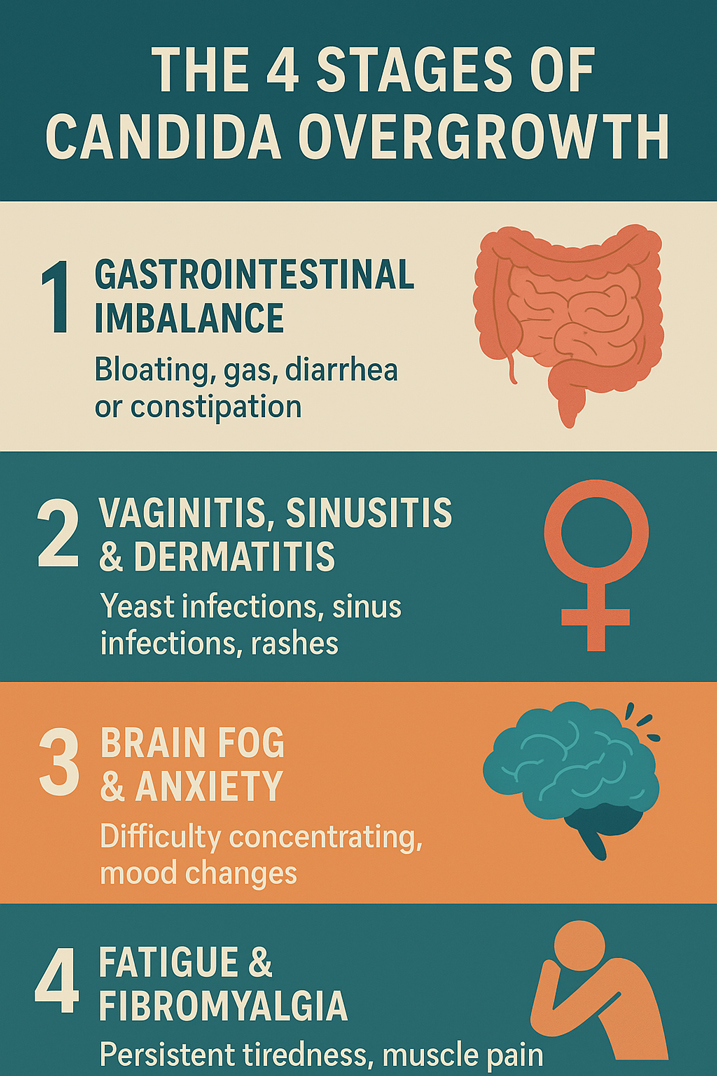
When we address the Candida root, many symptoms improve at once. Panic, brain fog, bloating, skin rashes, vaginal irritation, and chronic fatigue are often interconnected because they share a common cause: a disrupted terrain in which Candida gains the upper hand.
But how do we determine whether Candida is truly involved? |